How to Negotiate Funeral Costs
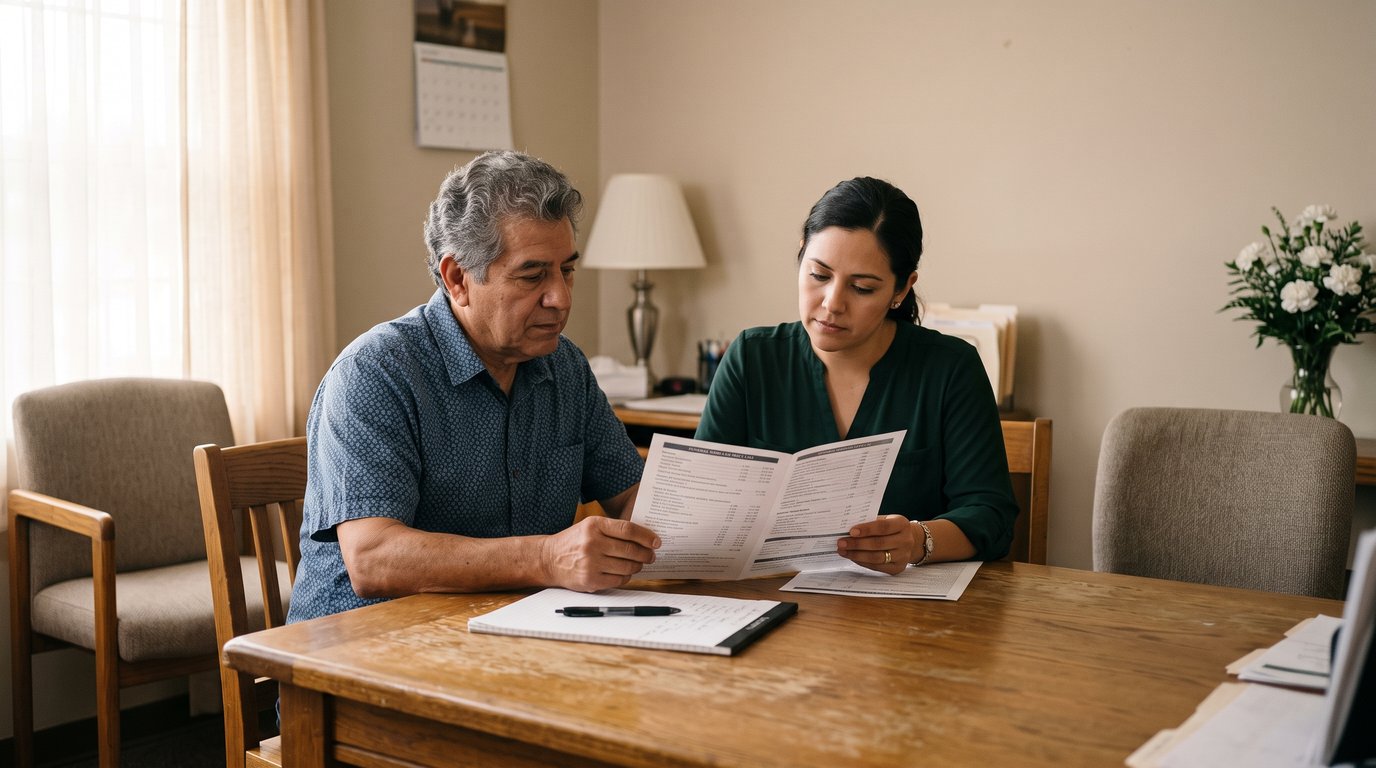
Let us be fair to funeral directors before anything else. Most of them are decent people running a difficult business in a small town, and most of them comply with the law. The reason families overpay is almost never a con. It is that they walk in without knowing what they are entitled to ask for, at the one moment in life when nobody feels like asking anything.
Your leverage here is not charm or haggling. It is a federal regulation called the Funeral Rule, enforced by the Federal Trade Commission, that gives you specific, written, enforceable rights. Used properly it can change a bill substantially, and none of it requires you to be confrontational.
This page covers what the Rule entitles you to, what is genuinely negotiable versus what is fixed, and how to have the conversation without pretending you are not grieving.
What the Funeral Rule entitles you to
These are rights, not requests. A funeral home that is following the law will not blink at any of them.
- A written, itemized General Price List you can keep. The funeral home must give a printed price list to anyone who asks, in person, about funeral goods, services or prices — before any discussion of arrangements. It lists each item and service the home offers with the price of each. Ask for it first, before you sit down and start describing what you want.
- Prices over the telephone. They must give you price information by phone if you ask, and you do not have to give your name, address or phone number to get it. This is what makes comparison shopping possible at all.
- A casket price list and an outer burial container price list, shown before you are taken to look at the merchandise. Read the list, not the showroom.
- The right to buy items individually. You do not have to accept a package. If you want three things off the list and nothing else, that is your choice to make.
- Only one mandatory charge. The non-declinable fee for the basic services of the funeral director and staff is the single fee that can be added to every arrangement regardless of what you select. A second non-declinable fee — a "facilities fee," a "casket handling fee" — on top of it violates the Rule.
- No handling fee for a casket or urn you bought elsewhere. This is the biggest single lever a family has. The funeral home cannot charge you a fee for using a casket you purchased from a third party, cannot refuse to use it, and cannot require you to be present when it is delivered.
- Embalming is not required by law except in certain narrow circumstances. A provider may not charge for embalming without permission, must disclose that it is not generally required, and must offer arrangements that do not require it, such as direct cremation or immediate burial.
- An alternative container for direct cremation. A funeral home cannot require you to buy a casket for a direct cremation, and must disclose that an unfinished wood box or other alternative container is available.
- No preservation claims. A provider may not tell you a casket or a sealed vault will keep remains preserved for a long or indefinite period, or protect them from gravesite conditions, when that is not true.
- Written proof of any "requirement." If a provider says a law, a cemetery or a crematory requires you to buy something, they must disclose that in writing and identify the requirement. Ask them to.
- An itemized written statement of everything you selected, with the total, before you pay.
What the Rule does not do
Be realistic about the limits, because they are where families get caught. The Rule does not cap any price and does not require anyone to negotiate. It applies to funeral providers that sell both funeral goods and funeral services, which means cemeteries, monument and marker dealers, and standalone casket retailers are generally outside it — and cemetery charges are frequently the second-largest line in the whole affair. Ask a cemetery for written prices anyway; many will provide them, they simply are not compelled to in the same way.
Get two or three price lists before you sit down with anyone
This is the step that does the work, and it is boring rather than brave. Collect the General Price List from two or three funeral homes in your area, by phone or in person, and compare them line by line rather than bottom line to bottom line. Packages are assembled differently on purpose, so a lower total may simply contain less.
Compare like for like: the same basic services fee, the same transfer of remains, the same casket grade, the same number of viewing days. Our funeral price comparison calculator is built for exactly this, so you can put two or three quotes side by side and see where the difference actually sits. It is also worth checking whether a local Funeral Consumers Alliance chapter publishes a price survey for your area, and worth calling at least one independent home rather than only the largest names, because prices for identical services in one metro area can differ enormously. If you want a sense of the national ranges first, see how much a funeral costs.
What is genuinely negotiable, and what is not
Effectively fixed. The non-declinable basic services fee is normally the home's published number, although many homes list a lower one for a direct cremation or immediate burial, so read the whole list rather than assuming one figure. Crematory fees, cemetery charges for the plot and for opening and closing the grave, permits, and certified copies of the death certificate are set by other parties and are not the funeral director's to discount.
Negotiable, or simply declinable. The casket. The outer burial container or vault. Embalming. Use of facilities and staff for a viewing, and how many days it runs. Extra vehicles and limousines. Printed programs, register books, acknowledgment cards. Flowers. A graveside service in addition to a chapel service.
The honest hierarchy is short: the casket, the vault, and the number of separately billed services are where the money is. Trimming three small merchandise lines feels productive and changes very little.
The casket is your single biggest lever
Caskets carry the largest markup in the room, and the Funeral Rule was written with them in mind.
Start by reading the casket price list rather than walking the showroom. Display rooms are arranged to sell, and the least expensive models are frequently not on display at all, or are shown in an unflattering corner or an unappealing color. If the list includes a cloth-covered or minimum-priced casket you cannot see, ask to be shown it or shown a photograph. That request alone often changes the conversation.
Then remember you can buy elsewhere. Online and warehouse retailers ship caskets directly to funeral homes, often within a day or two, and the home must accept it without a handling fee, without requiring you to be there for delivery, and without inspecting it for a charge. Confirm delivery timing against the service date before you order, and tell the funeral home in advance so the paperwork matches.
On vaults and "protective" caskets: a sealed unit costs meaningfully more, and the Rule specifically bars a provider from claiming it will preserve remains indefinitely. Many cemeteries do require some form of outer burial container so the ground does not subside — that is a real requirement, and a plain concrete liner satisfies it far more cheaply than a sealed vault. Ask the cemetery in writing what it actually requires.
One more option families do not know exists: a rental casket, used for a viewing or service with an inexpensive inner container, followed by cremation. Not every home offers it. Ask.
Decline what you do not need
Embalming is the clearest example. It is not generally required by law, and refrigeration, a prompt burial or a closed-casket service are alternatives, though a home may reasonably require it for a public viewing with an open casket. Ask what your state actually requires and what the home's own policy is, and get the distinction between the two.
Then look at the shape of the event rather than the merchandise. Two days of visitation instead of one, a chapel service plus a graveside service, a limousine and a second family car, staff and facilities for a reception — each is a separate line item, and each is optional. A single gathering at a church hall or a home afterward costs a fraction of the same hours billed by a funeral home.
Direct cremation is the price floor
If cost is the binding constraint, direct cremation with no viewing and no ceremony is the least expensive option most funeral homes offer, and every home covered by the Rule has to offer it and to let you use an alternative container. A memorial gathering can be held later, wherever you like, at whatever cost you choose — separating the disposition from the ceremony is what actually collapses the bill. Read direct cremation explained for what is and is not included, and burial versus cremation if the decision itself is still open.
Cash advance items and the markups on them
Cash advance items are things the funeral home buys on your behalf — certified copies of the death certificate, obituary placement, flowers, clergy honoraria, musicians, permits. They look like pass-through costs, and sometimes they are not.
The Funeral Rule requires a provider that marks these up, or receives a commission, discount or rebate it does not pass on, to disclose that it charges for this service. It does not require disclosure of how much. So ask directly what the underlying cost is, and buy the easy ones yourself: order death certificates from the vital records office, place the obituary with the newspaper directly, and arrange flowers through a florist. Obituary placement in particular is often priced per line and can be a surprisingly large number — our obituary cost calculator shows how it builds up.
How to have the conversation while grieving
The single most effective thing you can do is bring someone who is not grieving. A friend, a neighbor, an in-law who liked the person but is not undone by their death. Their job is to hold the price list, ask the follow-up questions, and say "can we see that priced without the vault?" while you sit with your own feelings. Nobody should do this alone.
A few sentences that do most of the work. Opening: "Before we talk about arrangements, could I have your general price list to keep?" Framing the budget out loud, early: "We have this much, and I need the total to come in under it." Redirecting rather than refusing: "Could you re-price that without embalming and without the second day of visitation?" And the one that protects you best of all: "Thank you — I am going to take this home and look at it tonight."
Do not sign the same day if you can avoid it. Read the itemized statement before you pay it, and query anything you do not recognize. Be polite and be specific, because a director who is being asked precise questions from a written price list generally answers them precisely. Our funeral planning checklist is useful to have in hand at the meeting.
If a funeral home refuses to give you a price list, adds a fee for a casket you bought elsewhere, or tells you the law requires a purchase and will not put it in writing, that is a Funeral Rule problem. Report it to the FTC at ReportFraud.ftc.gov and to your state funeral board or attorney general. The FTC operates a training and enforcement program for providers found violating the Rule, and complaints are how homes end up in it.
Protect Your Family From Unexpected Costs
See if you qualify for affordable coverage — it takes less than 60 seconds.
Check If You QualifyFrequently Asked Questions
Can I really buy a casket somewhere else and have the funeral home use it?
Yes. Under the FTC Funeral Rule a funeral home cannot charge you a handling fee for a casket you bought from a third party, cannot refuse to use it, and cannot require you to be present when it is delivered. Online and warehouse retailers ship directly to funeral homes, often within a day or two. Confirm the delivery date against the service date before you order, and tell the funeral home in advance.
Is everything on a funeral bill negotiable?
No. The non-declinable basic services fee is normally the home's published figure and is the one charge you cannot decline, though many homes list a lower one for direct cremation. Crematory fees, cemetery charges, permits and certified death certificates are set by other parties and are not the funeral director's to discount. What is genuinely negotiable or simply declinable is the merchandise and the number of separately billed services, above all the casket and the vault.
Is embalming required by law?
Generally no. Embalming is not required by law except in certain narrow circumstances, and a funeral home must disclose that, cannot charge for it without permission, and must offer arrangements that do not require it, such as direct cremation or immediate burial. A home may reasonably require it for a public viewing with an open casket, which is the home's own policy rather than a legal requirement. Ask which one you are being told, and ask what your state actually requires.
Does the Funeral Rule apply to cemeteries?
Generally no, and this is the most important limit to understand. The Rule covers providers that sell both funeral goods and funeral services, so cemeteries, monument and marker dealers, and standalone casket sellers are usually outside it, even though cemetery charges are often one of the largest costs. You can still ask a cemetery for written itemized prices and for written confirmation of anything it says it requires, and most will provide both.
Is it disrespectful to negotiate a funeral?
No. Asking for an itemized price list and declining things you do not want is not disrespect to the person who died, and funeral directors deal with these questions every week. The Funeral Rule exists precisely so that families can ask them. If it feels difficult, bring someone who is not grieving to hold the price list and ask the questions for you, and take the list home overnight before signing anything.